world
Scotland Fans Drink Boston Bars Dry During World Cup Visit
Scotland soccer supporters consumed four times the usual volume of Boston Lager at the Sam Adams Boston Taproom over a four-day period. Multiple bars reported running out of beer and other drinks as fans gathered for matches and related events.
Jun 16, 6:40 PM·1m read3 sources


DisruptionCelebration
 ESPN
ESPNAudio version
Tap play to generate a narrated version.
Scotland soccer fans in Boston for the 2026 World Cup drank four times the normal volume of Boston Lager at the Sam Adams Boston Taproom from Thursday to Sunday, the parent company of Sam Adams said in a news release. The company added that it arranged an emergency delivery Saturday morning and scheduled extra deliveries this week to restock.
A company representative at the taproom said the volume was unprecedented.
Staff at The White Bull Tavern said the establishment ran out of beer entirely during the period. One patron noted that only Bud Light remained available after the initial stock was depleted. Hennessy's Bar reported sales tripled compared with St. Patrick's Day, according to its chief operating officer.
The bar's management said the surge exceeded any previous event in more than 30 years of operation.
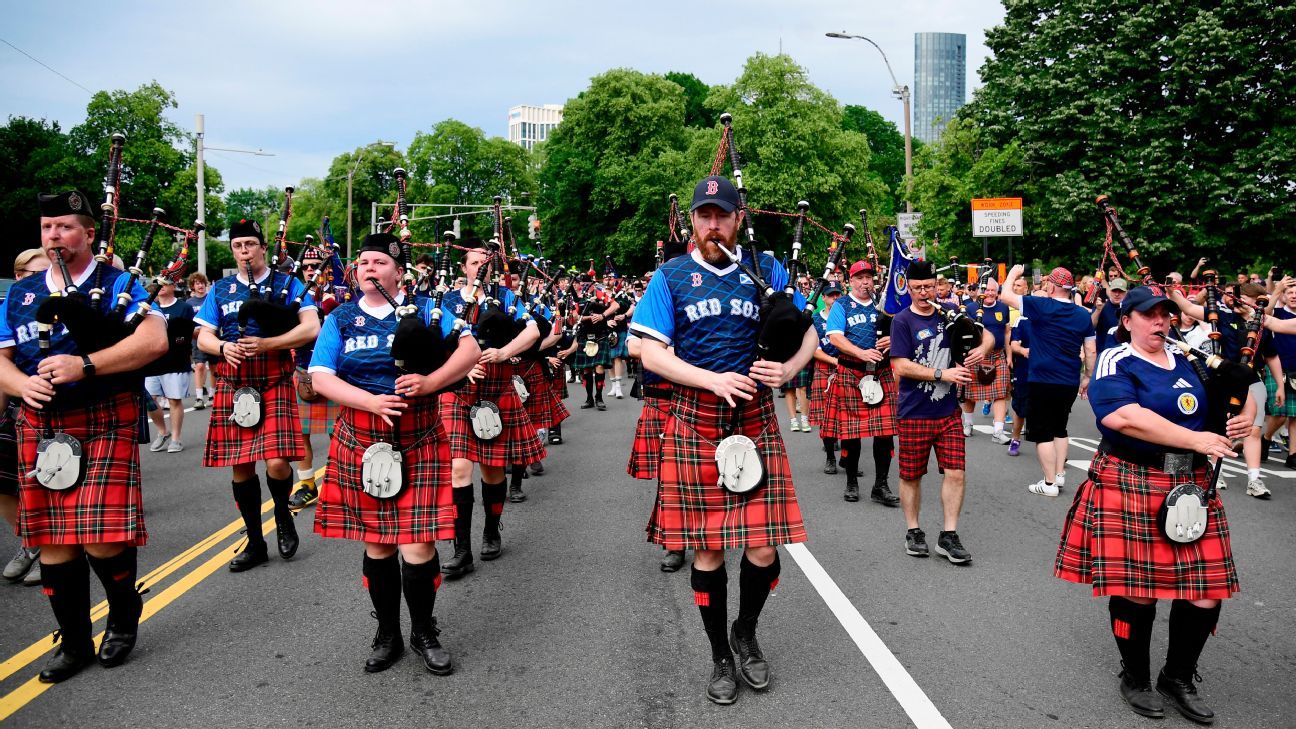
Scotland defeated Haiti 1-0 at Gillette Stadium on Saturday night. Fans later marched with bagpipes from Evans Way Park to Fenway Park for a Red Sox game designated Scotland Day. A conservative estimate placed attendance at the march above 5,000, with additional spectators inside the ballpark. Scotland is scheduled to play Morocco at Gillette Stadium on Friday.