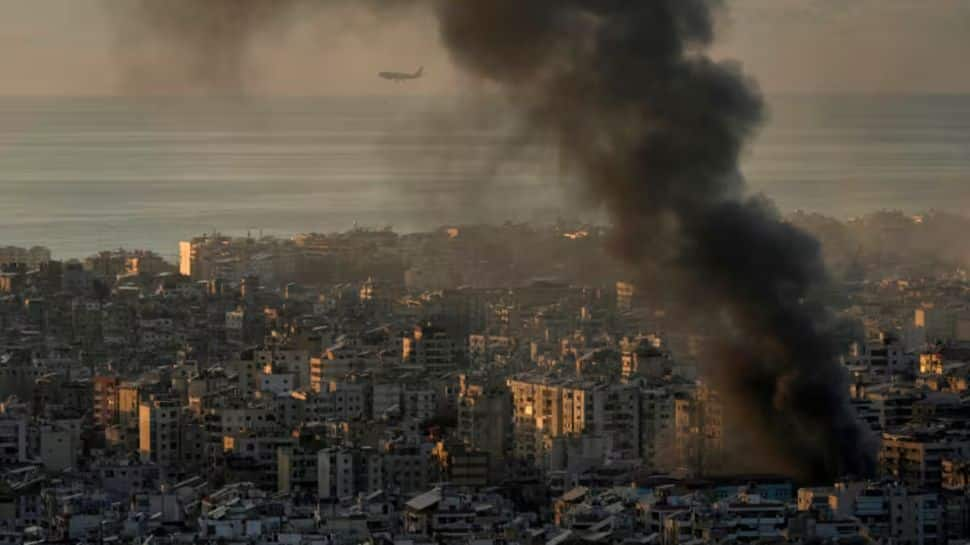
Six-Week US-Israel-Iran War Ends in Cease-Fire After Airstrikes and Missile Exchanges
U.S. and Israeli forces destroyed thousands of targets in Iran during a war that began on February 28, 2026, and ended with a cease-fire this week. Iran launched hundreds of missiles and drones, many intercepted, causing damage to Gulf infrastructure. The conflict highlighted effective air defenses and leadership strikes.
zeenews.india.comU.S. and Israeli airstrikes destroyed thousands of targets in Iran between February 28, 2026, and the start of a cease-fire this week, according to a report in Foreign Affairs. S. bases. S. and Israeli air defenses exceeded expectations, intercepting a high percentage of incoming threats.
The war began on February 28, 2026, with the Israeli military stating it killed 40 senior military figures in the first minute of its attack. These included the leaders of the Islamic Revolutionary Guard Corps, the Iranian army’s chief of staff, and Iran’s former defense minister. Iranian Supreme Leader Ali Khamenei was killed in his home during the conflict.
In the weeks following February 28, 2026, Israel’s strikes killed Iran’s intelligence minister, the head of the Basij militia, and influential security chief Ali Larijani. The United States and Israel destroyed or disabled roughly 50 to 80 percent of Iran’s 400 or so ballistic missile launchers in March 2026.
Foreign Affairs noted that this success in targeting launchers reduced the frequency and size of Iran’s missile volleys.
Iran launched approximately 850 ballistic and cruise missiles by mid-March 2026. As of early 2026, Iran possessed more than 2,500 ballistic missiles and several thousand one-way attack drones, including its own Shahed drone. S.
Bases in the Middle East. In the first five days of the war, Iran launched 550 ballistic missiles and 1,500 drones against targets in the Gulf, according to BBC reports cited in Foreign Affairs. Iran also launched 128 ballistic missiles and 1,100 drones against Israel in that period, per the same source.
U.S. and Gulf militaries intercepted 400 Iranian missiles and 1,000 drones on February 28 and March 1, 2026, as reported by The Wall Street Journal. Iran targeted the United Arab Emirates with 262 ballistic missiles and 1,475 drones in the first ten days of the war.
Only two missiles and 90 drones hit the UAE, which intercepted 99 percent of all incoming missiles and performed well against drones without exhausting its interceptors. Foreign Affairs highlighted that this defensive success mitigated potential damage.
By March 15, 2026, Iran had launched more than 290 missiles and 500 drones at Israel, with none reported to have hit any military target of significance.
After March 15, a few Iranian missiles and drones infiltrated Israel’s air defenses and struck civilian areas, including one that hit the Old City in Jerusalem. At least 250 Israelis had been killed or injured as of April 3, 2026. S.
Military bases and installations across the Gulf during the war. S. naval base in Bahrain. S. and Israeli sorties were mounted daily from land bases and aircraft carriers to hit military or industrial targets inside Iran before the cease-fire.
Iranian strikes wreaked havoc on airports and energy infrastructure, including the Ruwais oil refinery and the port of Fujairah in the UAE, oil fields in Saudi Arabia, and the Ras Laffan liquefied natural gas complex in Qatar. Qatar shut down the Ras Laffan complex on March 2, 2026, rather than risk further strikes and damage, a move that raised gas prices throughout the world.
On the same day, the Saudi national oil company Aramco shut its Ras Tanura refinery as a precaution after incoming drones were intercepted.
Iran managed to close the Strait of Hormuz during the war using antiship missiles, drones, and mines. The United States and Israel did not prevent this closure. Foreign Affairs reported that the United States and Israel have had trouble stopping the Houthis’ attacks on ships in the Red Sea over the past few years, indicating persistent challenges with such threats.
Central Command from 2019 to 2022, warned in his memoir that the volume of Iranian strikes would overwhelm air and missile defenses and reach their targets, resulting in many thousands of casualties, both military and civilian. S.
Power projection. S. and Israeli air defenses have parried Iranian missile barrages, following incidents in April and October 2024 and the 12-day war in June 2025. Israel eliminated the upper tier of Hamas and Hezbollah leadership between 2023 and 2025.
In the June 2025 war, Israel killed dozens of Iranian senior military leaders and scientists. In a separate event, the United States located and detained Venezuelan President Nicolás Maduro in a lightning special operation in January 2026. A 2022 war game by the Center for Strategic and International Studies, run 24 times, found that the United States and Japan lost dozens of ships, hundreds of aircraft, and thousands of servicemembers in simulated scenarios.
U.S. defense analysts assumed.
Key Facts
Story Timeline
6 events- 2026-04-10
Cease-fire in the Iran War started this week before April 10, 2026.
1 sourceunattributed - 2026-04-03
At least 250 Israelis had been killed or injured as of April 3, 2026.
1 sourceunattributed - 2026-03-15
Iran launched more than 290 missiles and 500 drones at Israel by March 15, 2026, with a few infiltrating defenses after that date.
1 sourceunattributed - 2026-03-02
Qatar shut down the Ras Laffan liquefied natural gas complex and Aramco shut its Ras Tanura refinery on March 2, 2026.
1 sourceunattributed - 2026-02-28
The war with Iran started on February 28, 2026, with Israeli strikes killing 40 senior military figures.
1 sourceunattributed - 2026-01
The United States located and detained Venezuelan President Nicolás Maduro in January 2026.
1 sourceunattributed
Potential Impact
- 01
Global gas prices rose due to shutdown of Qatar's Ras Laffan complex.
- 02
Closure of Strait of Hormuz disrupted shipping and trade routes.
- 03
Economic costs from damage to UAE, Saudi, and Qatari infrastructure affected energy markets.
- 04
Reduced U.S. interceptor stockpiles may increase vulnerability in future conflicts.
- 05
Strategic reassessment for adversaries like China regarding missile efficacy.
Transparency Panel
Related Stories
CNN Founder Ted Turner Dies at 87
Ted Turner, who created the first 24-hour cable news network in 1980, died at age 87. The announcement prompted tributes from President Trump, journalists and sports figures highlighting his media innovations and philanthropy.
axios.comUS Trade Deficit Rose 4.3 Percent in March to $60.3 Billion
The Commerce Department reported that the US trade deficit increased for the second consecutive month in March, reaching $60.3 billion. Imports rose 2.3 percent to $381.2 billion while exports increased 2.0 percent to $320.9 billion. The data covers the first full month after the…
France 24UN Calls for Release of Two Gaza Flotilla Activists
The United Nations urged Israel to free two activists seized last week during a humanitarian flotilla to Gaza. An Israeli court extended their detention until May 10 after rejecting an appeal. The activists remain in custody without charges and have begun a hunger strike.