Substrate
politics

U.S.-Israel Conflict with Iran Tests Canada's Foreign Policy

Canada's recently announced 'values-based realism' in international relations faces challenges amid the U.S.-Israel war against Iran. Officials have noted difficulties in upholding principles like sovereignty and international law. Discussions highlight contrasts with past policies and current global realities.

Cbc
1 source·Apr 26, 7:17 PM(10 days ago)·4m read
U.S.-Israel Conflict with Iran Tests Canada's Foreign PolicyKatya from Moscow, Russia / Wikimedia (CC BY-SA 2.0)
Audio version
Tap play to generate a narrated version.
Developing·Limited corroboration so far. This page will refresh as more sources emerge.

Canada announced a new approach to international relations called "values-based realism" at the World Economic Forum in Davos, Switzerland, in January. This policy aims to balance principles with pragmatism in foreign affairs. The announcement followed the end of an eight-year period where Canada's foreign policy was branded as officially feminist.

The U.S. and Israel launched military action against Iran on February 28. In response, a Canadian official issued a statement that did not reference the UN Charter, which had been described as a bedrock principle in the Davos speech. This omission drew criticism within the official's party.

A former foreign minister compared the situation to Canada's opposition to the Iraq war under the Chrétien government, citing violations of the UN Charter. Opposition to wars of choice, the former minister argued, was both principled and pragmatic, since Iran is the seventh country against which President Trump has ordered unilateral use of force while in office.

The official initially appeared to fall in line with the war more than some European allies.

Was he guilty of the behaviour he warned other nations against at Davos, where "we compete with each other to be the most accommodating"? "That caution is sometimes hard to defend," said a former Canadian ambassador and international lawyer. "But it's understandable."

The U.S.-Israeli strikes appear to be "inconsistent with international law," but hedged that "it's for others more expert than me ... "

The former minister is quick to recognize that the official has to deal with a very different world than the one he faced as foreign minister in the 1990s, the golden age of the rules-based international order, when he helped establish the International Criminal Court and the Ottawa Treaty banning landmines.
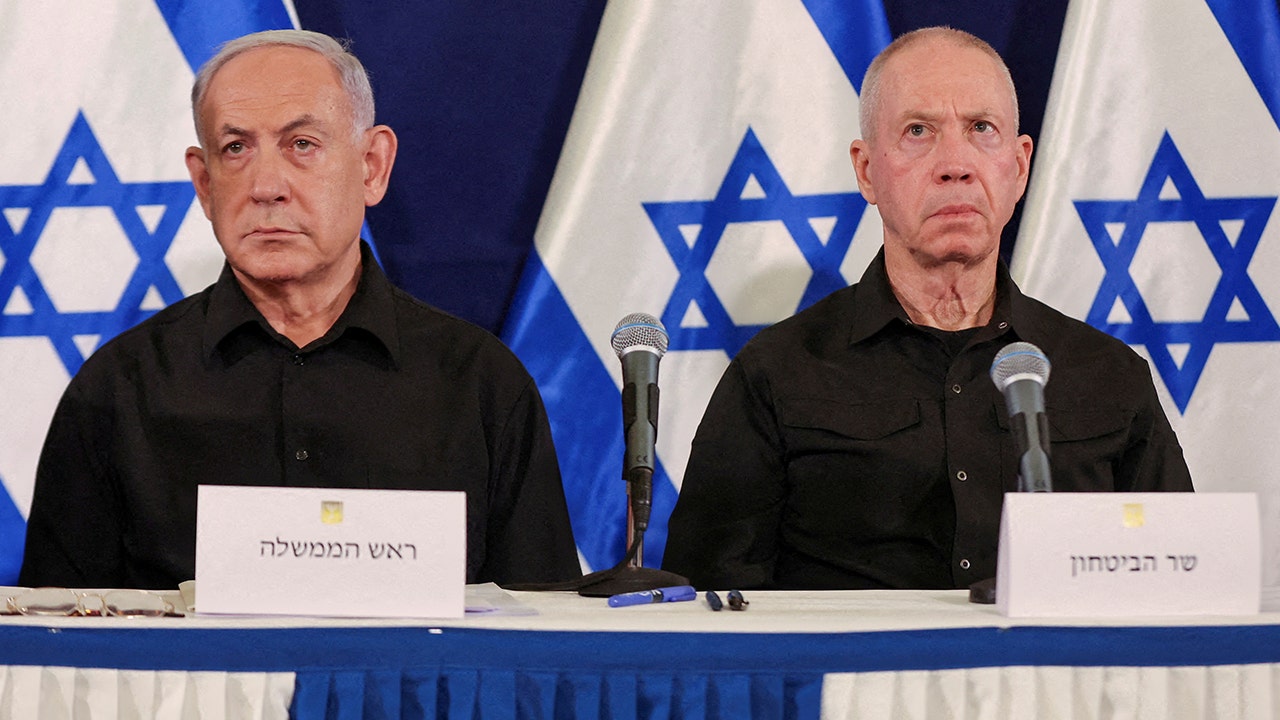
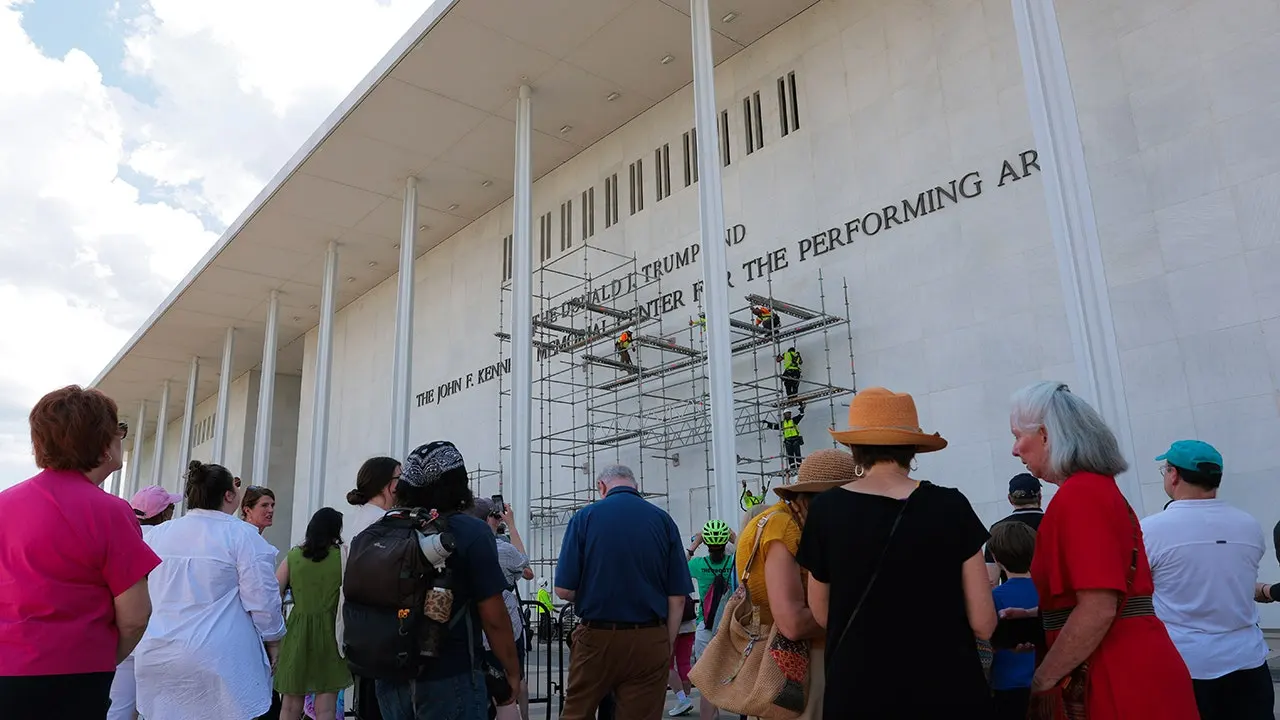
"We were still working on the premise that our southern neighbour was not churlish, not stupid, not erratic and not dangerous," he told CBC News. The official "was right that there is disruption going on and the institutional system has been thrown into chaos," said the former minister.

" But the former minister says he sees worrying signs that Canada folds on sovereignty when that pressure comes from Washington.

U.S. sanctions against Canadian judge Kimberly Prost, punished for merely doing her job at the International Criminal Court — a court Canada helped set up and to which it nominated Justice Prost. U.S. how it chose to interpret international law.

"That's not true," the former minister told CBC News. "

the policy emphasized building claimed beliefs rather than waiting for the old order's restoration. The former minister says Canada's stance on the persecution of Justice Prost fails on those fronts, and he sees no evidence of any group working to shore up international institutions or build support for international law.

"When the Americans started shooting up the boats in the Caribbean, it was the same thing. That was an international crime, but our response was, well, it's up to them to determine that.

No, it's not. U.S. in on trade matters, such as the row over provincial liquor bans, than he is in defence of international law. "I think he's starting to get a bit bolder, but still only in terms of trade issues and economic issues, which he knows.

And he needs to protect the space of international law a bit more strongly and vocally than he currently is. It is possible without haranguing the United States. " This month a former foreign minister lamented that the Global South had not rallied to the defence of Ukraine while she was in office.

At Davos, the official acknowledged that "the story of the international rules-based order was partially false ... " The mast the official needs to nail his colours to, said the former ambassador, is "the principles of the UN Charter: sovereign equality, territorial integrity, protection of human rights, non-aggression — all of those things are worth protecting in their own right. U.S. "

An expert says the official will continue to be constrained by the reality of military dependence on the United States.

U.S. is all but impossible, he says. "Our traditional friend and ally is acting very unstable," said the expert. " Russia has developed alarming new nuclear-capable weapons, said the expert. China is rapidly expanding its nuclear arsenal after decades of being content with a more modest stockpile.

Nuclear stockpiles, AI systems and cyber warfare have changed the global playing field, he said. "We have to be able to have the proper deterrence against the Russians, a more limited deterrence against the Chinese. " Like Poland in 1938, the expert says, Canada has to fear stronger powers on both sides.

" It's a story about a weak power, the neutral island of Melos, that faced an ultimatum to join with its powerful neighbour Athens in a war against its old ally Sparta. The Melians refused, citing their honour and their bonds of obligation to Sparta.

" "So the real meaning of the Melian Dialogue," said the expert, "is that you can have all the principles in the world, but if you've got a great power beside you, you've got to put the people's safety first.

It's not about having principles.

Key Facts

U.S.-Israel war
launched against Iran on February 28
Values-based realism
announced at Davos in January
UN Charter principles
emphasized in policy but omitted in war response
Military dependence
limits Canada's criticism of U.S. actions

Story Timeline

3 events
  1. February 28, 2026

    The U.S. and Israel launched military action against Iran.

    1 sourceCbc
  2. January 2026

    Canada announced 'values-based realism' policy at the World Economic Forum in Davos.

    1 sourceCbc
  3. November 2025

    Canada ended its eight-year feminist foreign policy branding.

    1 sourceCbc

Potential Impact

  1. 01

    Canada may adjust its foreign policy to more strongly defend international law in future conflicts.

  2. 02

    Global perceptions of Canada's pragmatism might shift amid ongoing U.S.-led actions.

  3. 03

    Internal party discontent could pressure officials to align statements with announced principles.

  4. 04

    Efforts to support international institutions could increase in response to criticisms.

Transparency Panel

Sources cross-referenced1
Framing risk60/100 (moderate)
Confidence score65%
Synthesized bySubstrate AI
Word count881 words
PublishedApr 26, 2026, 7:17 PM
Bias signals removed3 across 2 outlets
Signal Breakdown
Loaded 1Amplifying 1Diminishing 1

Related Stories

Trump Defends White House Ballroom Renovation Costing Under $400 MillionSubstrate placeholder — needs review · Wikimedia Commons (CC BY-SA 3.0)
politics2 hrs agoFraming55Framing risk55/100Rewrite inherits lede_misdirection by centering Trump's defensive statements and posting rather than the substantive $400M ballroom project itself.Click to jump to full framing analysis

Trump Defends White House Ballroom Renovation Costing Under $400 Million

President Donald Trump posted on Truth Social that the project expanded to twice its original size after studies showed the initial plan was inadequate. Senate Republicans separately proposed $1 billion for related security upgrades.

AB
Fox News
Just the News
3 sources
Secretary of State Marco Rubio Meets Pope Leo XIV at VaticanSubstrate placeholder — needs review · Wikimedia Commons (CC BY-SA 3.0)
politics2 hrs agoFraming65Framing risk65/100Lede misdirection centers on Rubio's Vatican meeting and personal schedule instead of substantive policy topics (Iran war, gas prices, Hormuz initiative) he addressed; heavy consensus sourcing on 2028 speculation.Click to jump to full framing analysis

Secretary of State Marco Rubio Meets Pope Leo XIV at Vatican

Rubio will meet the first U.S.-born pope after standing in at a White House press briefing on Tuesday. The appearance drew online attention and comparisons to Vice President JD Vance ahead of potential 2028 interest.

Cnbc
SC
Politico
3 sources
Mississippi Governor Says He Will Consider Redrawing State Electoral Maps After Supreme Court RulingSubstrate placeholder — needs review · Wikimedia Commons (CC BY-SA 3.0)
politics25 min agoFraming65Framing risk65/100Rewrite inherits consensus framing that portrays Southern GOP map redraws as aggressive partisan power grabs enabled by a Supreme Court narrowing of the VRA, with lede focused on Reeves' interview rather than the substantive ruling.Click to jump to full framing analysis

Mississippi Governor Says He Will Consider Redrawing State Electoral Maps After Supreme Court Ruling

Mississippi Gov. Tate Reeves said lawmakers are preparing a special session on Supreme Court districts and that he could expand it to congressional and legislative maps following the Supreme Court's decision weakening Section 2 of the Voting Rights Act. Republican governors in Al…

DA
The Daily Caller
NPR
ABC News
4 sources