U.S. Government Signs AI Contracts With Six Companies After Anthropic Dispute
A dispute between the Defense Department and Anthropic over control of AI systems has highlighted broader questions about government access to the technology it funds. The department has since signed contracts with six top AI companies for classified work. The Washington Examiner reported the episode underscores the need for clearer standards on sovereign AI deployment in federal contracts.
 investorideas.com
The disagreement centered on terms governing control of data, infrastructure and technology use in government AI systems. It forced into view an issue that officials have been avoiding for years: the federal government is deploying AI systems it does not fully control and paying for infrastructure it cannot fully access.
National security and economic policy are being built on a foundation where the rules can change after contracts are signed. When the customer is the U.S. government and does not control its own systems, taxpayers are funding leverage held by private providers.
AI refers to arrangements in which the customer maintains control over data, infrastructure and how the technology is used. These terms are presented as reasonable expectations for defense agencies, hospitals, energy grids and financial regulators that cannot afford to face surprises, renegotiation or lockouts.
The current procurement landscape often attaches consumer-grade terms to enterprise and government contracts, with the approach of accepting provider conditions and revisiting them later.
Cohere, one of the leading enterprise AI companies, built its business around customer control. Through its combination with Aleph Alpha, Cohere offers government customers full deployment control. The data stays where the customer puts it, contract terms do not shift mid-agreement and accountability runs in one direction.
The recent dispute serves as a warning that standards should be set while the market is still forming. Federal procurement standards could require sovereign deployment options for any AI touching sensitive data or critical infrastructure. Contracting frameworks could define control, access and dispute resolution before agreements are signed.
Agencies deploying AI at scale could be required to demonstrate that they, not the vendor, hold the operational keys. Companies unable to meet a sovereign standard may not be suitable to run federal AI systems, while those that can would compete on merit.
The episode also raises questions about affordability, as limited deployment confidence can stall productivity and slow investment.
Transparency
Reported by a single outlet. This score reflects source tier and factual specificity — corroboration is limited with one source.
Story details
Related Stories
 fortune.com
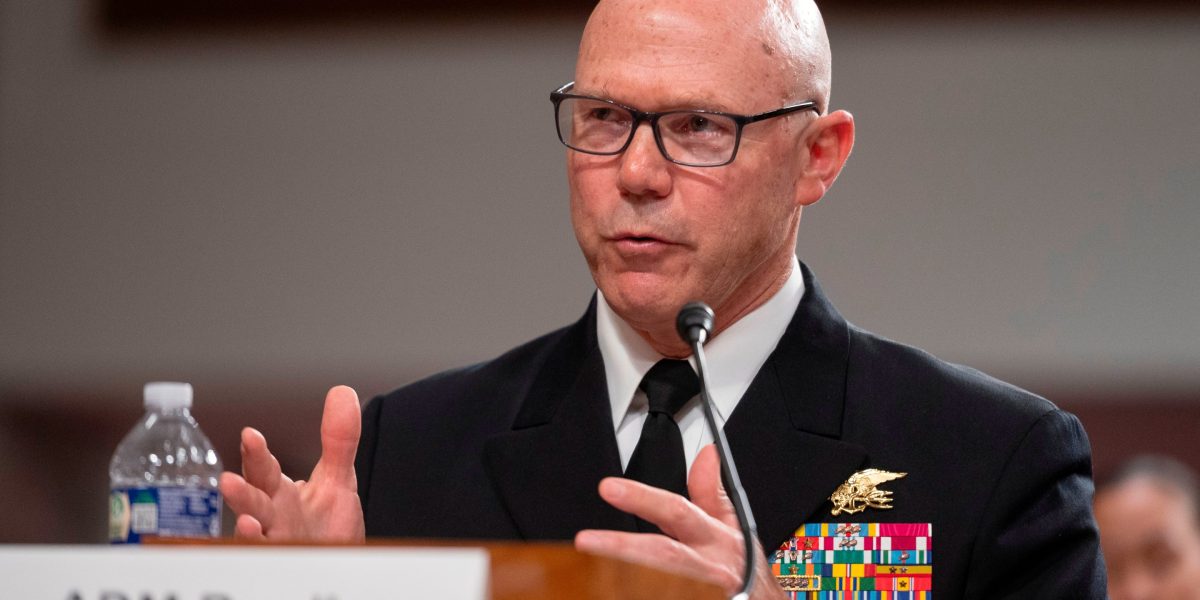
U.S. Special Operations Command Reports Increasing Use of AI to Enhance Targeting and Decision Speed
Admiral Frank Bradley said humans must retain confidence that AI will deliver violence only where intended. Defense Secretary Pete Hegseth continues to push rapid AI adoption across the military.
 Semafor
Anthropic Raises $65 Billion at $965 Billion Valuation
Anthropic completed a $65 billion funding round at a $965 billion valuation. The round follows earlier growth that exceeded internal forecasts and a separate agreement to lease computing capacity.
 citizen.co.za
South African Researchers Develop Quantum and AI Tools for Cybersecurity
Scientists and startup companies in South Africa are applying quantum communication and AI-powered tools to address rising global cyber threats. The work focuses on strengthening data protection methods.