U.S. and Philippine Forces Launch Second Phase of Salaknib Exercise
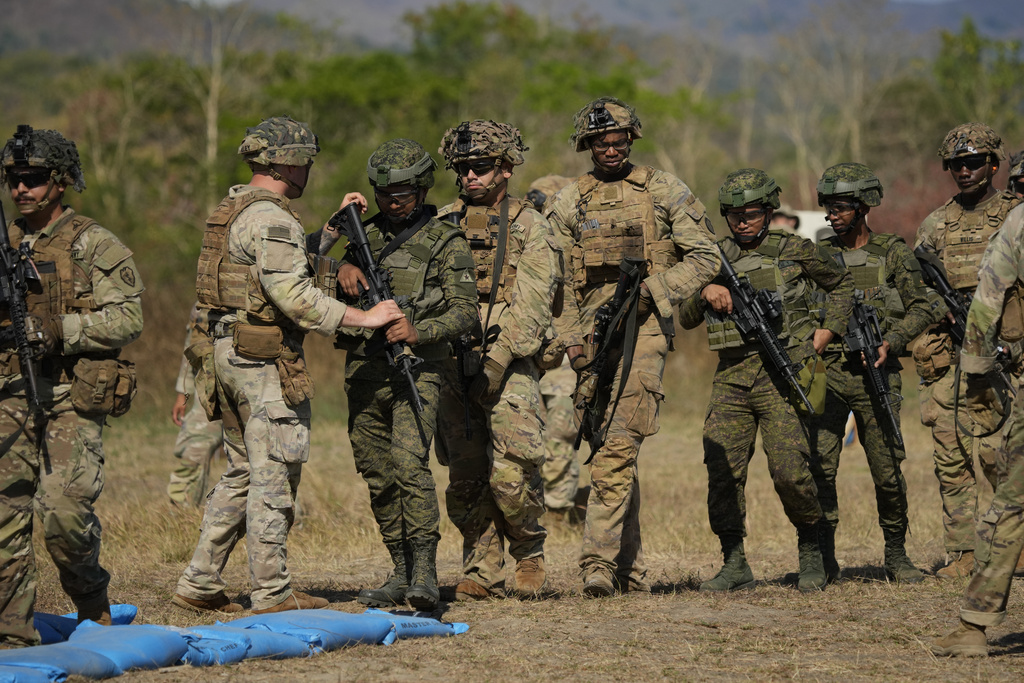
The U.S. Army's 25th Infantry Division and the Armed Forces of the Philippines opened the Joint Pacific Multinational Readiness Center-Exportable Exercise as Part II of bilateral Exercise Salaknib on May 13 2026. The drill expands multinational training that sharpens interoperability standards across participating forces in the Indo-Pacific.
 theyeshivaworld.com
MANILA — The U.S. Army's 25th Infantry Division, partnered with the Armed Forces of the Philippines and additional multinational allies, launched the second phase of Exercise Salaknib through the Joint Pacific Multinational Readiness Center-Exportable Exercise on May 13.
The exercise draws together U.S. Army infantry units, Philippine ground forces, and contingents from multiple allied nations for large-scale combined-arms training at Philippine military installations. The Joint Pacific Multinational Readiness Center-Exportable program supplies standardized, scalable training packages that replicate full-spectrum combat environments without requiring permanent U.S. bases on foreign soil.
Exact troop numbers were not released in the initial announcement, yet the format routinely involves battalion-level maneuver elements, artillery, aviation support, and logistics units from each participant.
Prior phases of Salaknib operated on a bilateral U.S.-Philippine basis with limited third-country observers. The current iteration converts the exercise into a formal multinational readiness center event, effective immediately upon launch. This shifts the training construct from ad-hoc bilateral drills to a repeatable, exportable certification pathway that participating units can schedule against their annual readiness cycles.
The change triggers three operational follow-ons. First, allied units now receive standardized after-action data sets that feed directly into their respective national readiness reporting systems, enabling faster identification of interoperability gaps.
Second, the Philippine Armed Forces gain recurring access to U.S. Army doctrinal training packages that remain available for domestic use after the exercise concludes. Third, the multinational framework activates planning timelines for subsequent Joint Pacific Multinational Readiness Center events across the Indo-Pacific theater, requiring participating defense ministries to align future budgets and deployment schedules by the end of fiscal 2026.
This launch marks the second phase of Salaknib conducted in 2026. The first phase occurred earlier in the year under the same bilateral agreement between the United States and the Philippines. The exercise series originated under the U.S. Indo-Pacific Command's security cooperation authorities and has expanded in scope each iteration to incorporate additional partner nations.
Coverage spread
Substrate’s article above is written from the primary record. Below: how mainstream outlets reported the same event.
No mainstream coverage of this story has surfaced yet.
Transparency Panel
Related Stories
 BBC News
Trump Meets Advisers to Decide on Iran Ceasefire Extension
President Trump said he is holding a Situation Room meeting to make a final decision on a possible deal with Iran. The proposed agreement would extend the ceasefire by 60 days and reopen the Strait of Hormuz.
 middleeasteye.net
Trump to Decide on Iran Deal in Situation Room Meeting
President Trump said Friday he is heading into the Situation Room to make a final determination on a potential agreement with Iran. The proposed deal would reopen the Strait of Hormuz without tolls and require destruction of Iran's highly-enriched uranium.
 benzinga.com
Vietnam Clears Graves for Trump Organization Project in Hung Yen Province
Farmers in Hung Yen province are exhuming family graves to make way for a $1.5 billion Trump Organization development that includes hotels, villas and a golf course. The project, approved last year, has drawn local resistance over compensation levels and relocation of remains.