US President Met Chinese Leader in Beijing for Trade and Security Talks
The US president received a formal welcome in Beijing including a military honour guard and banquet. The two leaders discussed economic cooperation, the situation involving Iran and the Strait of Hormuz, and Taiwan. No specific agreements were announced after the first day of meetings that included a delegation of American business executives.
 The Bbc
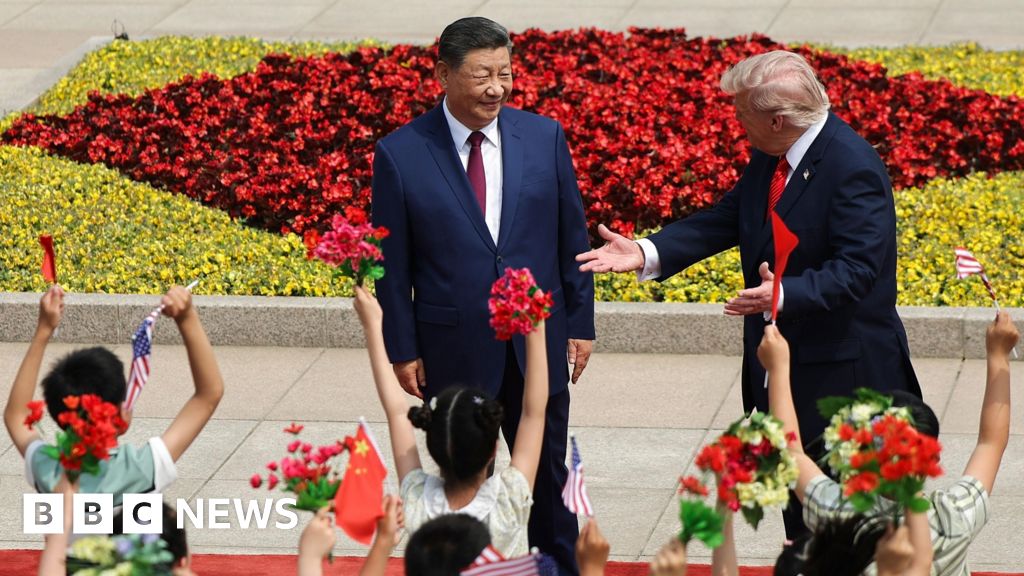
The leaders of the United States and China exchanged cordial greetings during the first day of a visit by the US president to Beijing. A military honour guard lined up outside the Great Hall of the People, accompanied by a gun salute and a band playing the US national anthem.
The US president paused to greet schoolchildren waving Chinese and American flags and patted the Chinese leader on the arm while shaking hands. The US president told the Chinese leader "You're a great leader. I say it to everybody" in remarks that appeared unscripted.
During a tour of the Temple of Heaven he told reporters that China was beautiful. At an evening banquet he described the talks as a "cherished" opportunity. The visit occurs after years of tensions between the two countries. In past statements the US president had used strong language toward China, including during his first term in office.
Tariffs between the two sides had reached over 100 percent at the height of their trade dispute before a fragile truce was reached.
Officials are seeking to determine whether the existing trade truce will continue and what new arrangement might replace it. Discussions also covered whether China could help broker a deal involving Iran and the blocked Strait of Hormuz. Taiwan, which China claims as its territory, formed another central issue, with the Chinese leader warning that tensions over the island could lead to conflict, according to Chinese state media.
The Chinese side arranged a formal spectacle that included the attendance of 30 American business executives. The executives present at the banquet included the heads of several major technology and automotive companies. The White House said the two sides discussed ways to enhance economic cooperation, including greater access for US firms to the Chinese market and Chinese investment in US industries.
On Iran, the White House statement said both countries agreed that Iran can never have a nuclear weapon and that the Strait of Hormuz must remain open to support the free flow of energy. The two leaders agreed to describe their relationship as "constructive, strategic and stable" to guide ties for the next three years.
China produces about one third of the world's goods, processes more than 90 percent of its rare earth minerals, and manufactures 60 to 80 percent of solar panels, wind turbines and electric vehicles. The country has expanded trade with nations outside the United States since the previous US presidential term.
Chinese officials responded to earlier tariffs by matching them and restricting exports of rare earth minerals. The Chinese leader has sought to present himself as a stable international figure. Several leaders from US allies including Canada, the UK and Germany have engaged with Beijing in recent periods.
The US president is expected to seek Chinese assistance in reopening the Strait of Hormuz after disruptions linked to the situation in Iran. Further meetings are scheduled for Friday. The Chinese leader has indicated interest in expanding cooperation in trade and agriculture, which could involve increased Chinese purchases of American agricultural products and aircraft.
The US president invited the Chinese leader to visit the White House in September.
Key Facts
Story Timeline
4 events- 2026-05-14
US president received military welcome and met Chinese leader in Beijing.
1 sourceThe Bbc - 2026-05-14
Two leaders held talks and attended banquet with US business executives.
1 sourceThe Bbc - 2026-05-14
Chinese state media reported warning on Taiwan tensions during talks.
1 sourceThe Bbc - 2026-05-15
Second meeting between the leaders is scheduled for Friday.
1 sourceThe Bbc
Potential Impact
- 01
Taiwan officials will monitor any shifts in US arms sales policy.
- 02
US firms may gain expanded access to Chinese markets following the talks.
- 03
China could increase purchases of US agricultural goods and aircraft.
- 04
Diplomatic efforts on Iran and the Strait of Hormuz may see Chinese involvement.
Transparency Panel
Related Stories
 BBC News
Trump Meets Advisers to Decide on Iran Ceasefire Extension
President Trump said he is holding a Situation Room meeting to make a final decision on a possible deal with Iran. The proposed agreement would extend the ceasefire by 60 days and reopen the Strait of Hormuz.
 middleeasteye.net
Trump to Decide on Iran Deal in Situation Room Meeting
President Trump said Friday he is heading into the Situation Room to make a final determination on a potential agreement with Iran. The proposed deal would reopen the Strait of Hormuz without tolls and require destruction of Iran's highly-enriched uranium.
 realitytea.com
Trump Says U.S. Will Lift Iran Naval Blockade After Nuclear and Hormuz Pledges
President Trump stated the U.S. will end its naval blockade of Iran once Tehran commits to forgoing nuclear weapons and opens the Strait of Hormuz to unrestricted shipping. The announcement came via Truth Social and a live statement.